Posts

The Dialogue of Noir

Image
Two weeks ago four members of my writing group and I did the very first table reading of Cleveland City . We read a critical Act 1 scene out loud, in character. I mostly listened. And for the first time I heard the words of my 10-year project come to life. Dialogue is very tricky. I once read somewhere that if you nail your dialog, then you can remove the character names from the script and be able to know who is saying what based on the words themselves. That is how important language is. Each one of us speaks just ever so differently. The language of characters on screen is not the formal written language most of us learned in school. No one really writes how they speak or speaks how they write. And as a screenwriter, my job is to write the dialog that's authentic to each character's personality, backstory and actions. It must also be conversational. It must flow. The first table reading of Cleveland City helped me realize that as is the dialogue is too clinical. The c...

68 Scenes of Gritty Noir

Image
This evening I finished the first full draft of the Cleveland City treatment - 68 scenes of gritty noir.  It's a mixed bag of emotions. As a writer you work and you write and you think and you revise and you question and you write more and more and more and more. And you think the finish line is some absurd and abstract concept that never materializes. And, really, no one ever finishes a screenplay. Because a screenplay never really reaches a final point. A book, on the other hand, can begin or end in any way the author sees it. She can hire an editor and graphic designer to complete the work and prepare it for an Amazon upload. And voila. It's ready for its audience, the readers. A screenplay, on top of many revisions, requires many people to say yes to it before it reaches its audience, the viewers. The screenwriter next needs to start pitching it - contests, agents, friends, agents, actors, agents, producers, agents, investors and more agents. Just because one of t...

Crawling Out Of The Sewer

Image
Each time I watch The Third Man I discover something new. This past weekend, while catching the third act of this classic Noir, I came across two new observations:           1. Scorsese paid homage to a key post-funeral scene by replicating the same scene in The Departed (more on that in a upcoming blog)           2. The physical and visual intensity of our protagonist running around and then trying to get out of the post-war Vienna sewer while he's being chased by military police is a beautiful metaphor for many of our favorite Noir characters: even if they are not in the sewer itself, their moral compass certainly is. Orson Welles, as Harry Lime, who waters down medicine that then kills the very children whose mothers survived the bombs, is both monster and charmer. Charming monsters are the scariest. Because they live their lives keeping one foot in the sewer while the other (to parap...

The Soundtrack of a City

Image
Back in late Autumn, 2008, as the last of the tree leaves descended onto the thinning grass, I struggled to figure out the third act of the story. How does it end? I kept asking myself. So I took two steps to help me: 1. I printed out color headshots of all the actors I wanted in the roles, with their character names included and then taped them all up on the wall that faced my writing desk. 2. I made a soundtrack off all the songs that sounded like what I wanted the film to look like. Once I did both, thus cementing the tone for the story, finishing the script came much easier: looking into the eyes of those faces and listening to those songs inspired my sense of sight and sound. A decade later, as Jacob and I work on finishing the most current version of the story, I was thinking of revisiting the soundtrack to see if it still fits. But couldn't find that list of songs anywhere. And, yet, just yesterday, while going through some boxes of my older projects, I just happe...

Annabella Sciorra - The Perfect Actor to Play Esti, the Lead

Image
I've been thinking about who could possibly play Esti, the lead character in my film. She'd have to be in her mid 50s, have an ethnic look and be able to deliver both subtlety and intensity. Yes, she's a mother but she's not the supporting character to a child or a spouse. She's a woman in her own right - beautiful, successful, courageous and smart. She calls the shots in her life. Esti is the subject of the story. Not the object. When I was watching the Oscars last week and I saw Annabella Sciorra come out with Ashley Judd and with Selma Hayek, I had tears in my eyes. These three women, among others, have been through just way too much. And when the three of them held each other and physically supported Sciorra, who for the past decade has had minimal opportunity to hone her craft on the big screen thanks to The Monster, I could tell just how nervous she was to be there. She started by stating something simple and elegant: “It's nice to see you all aga...

Cleveland City Screenplay: The Central Characters and the Matriarch

Image
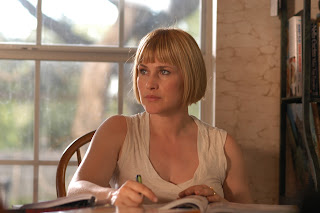
    "Out of suffering have emerged the strongest souls; the most massive characters are seared with scars."  - Khalil Gibran  I'm thrilled to share with you the central characters of Cleveland City! Most first originated a decade ago and but they just now coming to life, telling me their backstory, their motivation, their struggles and their secrets. All families have secrets and the lives we mortals live, keeps of these secrets, at a certain point understand that either we risk bringing the truth to life or those very secrets destroy us, from within.  Whether Patricia Arquette, who won Best Supporting Actress for Boyhood or Julia Roberts for her Best Actress Oscar portrayal of real life single mom Erin Brokovich , in both films, these two mothers went digging for an honest life, not just for themselves, but also for their children. That's what true character is about. I love my characters. They are flawed yet motivated, broken yet stro...

Cleveland City: The Pitch, The Treatment & The Poster

Image
A lot of development on the Cleveland City script treatment.  We have a logline. We have a tagline. We have a poster. And the first sequential 13 scenes - ie Act 1 - is now damn near close. Once Jacob and I nail this sequence, truly the backstory of this dark, dark tale, that's when the rest of the scenes can flow. We will have our structure. Next? Getting all 52 down on paper and then resequencing them in the order we want the story to unfold. The way we want to audience to make their discoveries.  And not one reveal more. We gotta keep y'all in the dark. Because it's Noir.  

Temptation, Heat and Erotica in Film Noir

Image
Body Heat was very much about that for me. What happens when a guy who has personal charm and has done well with women but isn't effective in the world runs into someone who's effective in the world?" - Lawrence Kasdan Some of the best Noir films tease us with the possibility of what may happen between men and women. The women are sultry. The men are bad boys. And the good men - once they meet the sultry women - they then go bad, too. In the 80s and then then 90s, a heyday for Neo Noir and great cinema in general, we were blessed with many cinematic gems that, with their dimmed lighting, reserved pacing and and intense actors, forced us, the viewers, to sit in those theater seats with great anticipation as to what will happen next. Will they kiss? Will they cheat? Will she kill? Will he die? The male actors who rocked these films most? Michael Douglas, William Hurt, Denzel Washington, Jeff Daniels. But it was the female actors who lured in and marked these men...

In Noir It's All About the Facades

Image
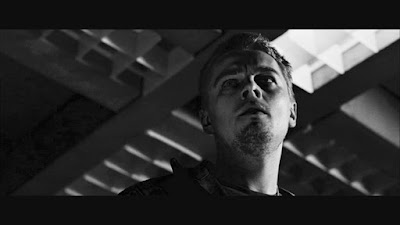
Nothing is what is seems. That's the premise of every single Noir story.  The characters - they're full of secrets, lies, past lives, multiple identities, mysterious backgrounds and dubious professions. The one thing they all share is that there's a duplicity that holds them together - it's what keeps so many of them alive. Ultimately, it's all about the facade - that thick or thin layer that the public gets to see - a veil behind which our favorite characters do their business and live their lives. While not a traditional Noir, Martin Scorsese's take on The Departed offers perfect example of this. Matt Damon's Colin Sullivan is both police agent and crime son, chasing his own tail. Leonardo DiCaprio's Billy is both cop and acting criminal, chasing Sullivan. Vera Farmiga's Madolyn, the cop psychiatrist, sleeps with both of them. And Jack Nicholson's Frank Costello is the big mob boss who it turns out is also the FBI informant. In the end a...

The Slippery Slope of Motherhood in Noir

Image
In film noir, we rarely see mothers. And when we do, we see them as tragedies.  Mildred Pierce is a divorced working mother whose daughter sleeps with her lover. Phyllis Dietrichson in Double Indemnity is the evil step mother who plots to murder the only living parent her step daughter still has. The most tragic Noir mother, of course, is Evelyn Mulwray in Chinatown . Raped by her own father, secluded with her daughter/ sister, and then murdered in the end, there's absolutely nothing but horror in her short and brutal life.  In Cleveland City , we meet several mothers. There's Esti, the Jewish society-page widow, real estate powerhouse and mother of two grown sons. And then we also meet Colleen. Colleen is a 30-something young mom of one son. Her husband was groomed by her own dad and being provided for was never her concern. Colleen did not go to college. She did not aspire to be a doctor or a lawyer or anything that required any level of schooling. It wasn't t...

The Seemingly Good Men of Noir: A Reflection of the Company They Keep

Image
When we sit down to watch any Film Noir, we already make a couple assumptions: 1. This isn't going to end well for anyone. 2. No one is innocent. However, when a Noir story first begins, there's usually someone who appears to have some sort of ethic. Some level or morals and decency. In Something Wild , a 1986 neo-noir directed by the late Jonathan Demme, Jeff Daniels, as Charles, meets a Lulu-esque Femme Fatale named Audrey. Melanie Griffith portrayed her character with the mastery of a surgeon. The second Audrey spotted Charles at the New York City diner, she marks him, and before he knows it, this vanilla suburban husband and office drone embarks on the journey of a lifetime. Not only does Audrey take him home, to her small town, a massive contrast to the urban jungle where they first met, but he then meets her mother, childhood friend and, at Audrey's 10 year high school reunion, they encounter Ray, Audrey's menacing ex. Ray Liotta exuded that bad boy villa...

Film Noir Men: Living On The Dangerous Edge of Life

Image
The men we meet in Film Noir live on the dangerous edge of life. They typically have "just one more thing" they need to do.  One more robbery to score, one more deal to pull off, one more delivery they need to make. Typically this "one more" becomes the last thing they do before their lives flip over. In the 2014 Norwegian Noir In Order of Disappearance , a commercial snow plower and local mountain town man of the year Nils Dickman discovers his only son was murdered simply for being in the wrong place at the just the right time. The young man wasn't supposed to be killed, but by association, by simply knowing the wrong people, he meets his fate. Stellan SkarsgĂ„rd , who plays Dickman (masterfully, as always) then spends the rest of the movie deductively figuring out who is responsible for his child's death and quickly goes from man of the year to a paternal vigilante, who won't rest until he confronts the last of those associated with the crime. It...

When She's Not the Femme Fatale, She's Disposable

Image
The Femme Fatale is a staple in traditional Noir. The glance, the lipstick, the heels. She's a force to be reckoned with and no one dares to stand in her way. This hasn't necessarily been the case in Neo Noir - there was only one female character in The Usual Suspects - Edie, the lawyer - and she was anything but dangerous or even central to the story. So what about these other women in Noir? The ones who aren't threatening to destroy men's lives or trying to manipulate the situation or run away with all the money? What about them? By the end of The Usual Suspects, Edie gets killed. In Mildred Pierce , it's not Joan Crawford's character that depicts the Femme Fatale, but, rather, her cruel and cold daughter Veda. Mildred gets stepped on by her one surviving child and by Monty, the lover who hooks both of them into their own beds. In Double Indemnity , as Barbara Stanwyck's Phyllis orchestrates her killer plan, it's her stepdaughter Lola, who...

Film Noir Love: Someone Always Gets Derailed

Image
"Young mothers love me even ghosts of Girlfriends call from Cleveland They will meet me anytime and anywhere" - Day I Die by The National In any great film noir, there's a love story.  Double Indemnity. Mildred Pierce. Blade Runner. The commonality they all share is that is in each tale of passion, heat and killer dialog, one party loves the other more. In some cases, they're not loved back in return. At all. Worse off? The man or woman to whom they give heir hearts and give up everything have simply used them as a means to an end. Once the desired outcome is achieved those fallen into the swoon of it all are left with nothing. Sometimes sent to jail. And in the most tragic noir? They die. There is no riding into the sunset together. When it comes to showing the pain of heartbreak, visually and viscerally film noir works stronger than any other genre.  Recent studies have shown that in bad break ups, the heart has the same physical reaction as it does...

Living in Noir Times: Blade Runner and Near Future Dystopia Are Here to Stay

Image
"We're not computers, Sebastian, we're physical." - Rutger Hauer, Blade Rutger I write this blog every Sunday night. As I transition out of the weekend and prepare for the week ahead, seems like whatever time of day I sit down to write this, the news hits. And this entire season the news has been hitting hard. We all know what happened today. And regarding that, I don't have any words. I've been thinking a lot about what's happening right now and I've come to the conclusion that, once again, we are living in Noir Times. In The Film Experience , the authors point out, "Like the ending in Chinatown , many of the variations in these crime film formulas may be the product of changing times. With the Great Depression, Prohibition and urban crowding and unrest, the crime film of the 1930s acted out social instabilities through the marginal success of a marginal detective, like Sam Spade and others. In the 1970s, after the government corrupti...

Every Day is Halloween: In Noir, All Characters Wear a Mask

Image
"You think you can catch Keyser Soze? You think a guy like that comes this close to getting caught, and sticks his head out?" - Kevin Spacey, The Usual Suspects It's Halloween weekend. Across the country, kids and adults alike are dressing up in costume, trick or treating and attending parties galore. Wearing a costume and, especially a mask, is holiday tradition, one that passes generation to generation. Superheroes, monsters, sexy nurses and the latest political and pop culture references serve as muse for All Hallow's Eve. For the characters in Film Noir, to quote the band Ministry, "everyday IS Halloween." We, the audience, rarely know who is the hero, who is the monster and who is both. Sometimes we guess and feel good about ourselves and our deductive intelligence. And sometimes we're so surprised, no shocked, that we shiver in flashback, thinking how could we have possibly missed that detail. Remember Verbal Kint? This is one of the bigges...

The Film Noir Passport: From German Expressionism to Cleveland

Image
"Your future is all used up." Marlene Dietrich, Touch of Evil German Expressionism fueled Film Noir . The Cabinet of Dr. Caligari , with its distorted shapes, exaggerated sets and extreme shadows, set that tone of something not quite right lurking in the background, ready to take center stage. With each scene the uncomfortable viewer knew one thing: a crime will be committed. There's a murder. There's a kidnapping. There's a master. There's a pawn. There's a narrator. There's a surprise twist ending. Nothing is what it seems. That was 1920. The world had just seen its great war. And while German Expressionism began prior to the massive destruction, how could the film medium ever return to something naive? It took another world war for America to give birth to Film Noir. The timing of things certainly didn't hurt - the horror of WWI fueled the darkness of 1930's pulp fiction and then talented filmmakers and actors fled Europe to Ameri...

The Femme Fatale: Manipulator or Survivor?

Image
Merriam-Webster Definition of femme fatale:   1   a seductive woman who lures men into dangerous or compromising situations   2 a woman who attracts men by an aura of charm and mystery The Harvey Weinstein tragedy is prompting a lot of discourse about sexuality, politics, power, media, society, law and money. The lid's been blown off the Great American Value System. Social media is exploding even more than usual with opinions, arguments, trolls, supporters and lots of women, and even a few men, opening up about their tales of harassment and abuse. Woody Allen just publicly sided with Weinstein. (surprise!) While Weinstein's wife, his company and the Academy have all severed relationships with him.  Rose McGowan and her #rosearmy quit Twitter for one day after they shut her down for publicly posting a phone number. A Twitter stranger replied to one of my tweets supporting McGowan, calling her public statements "hypocrisy" and "do...

The Duality of Man

Image
Film Noir showcases the duality of man like no other genre. As I write this post the whole Harvey Weinstein scandal has broken out. The film producer, Hollywood mogul, husband, father and philanthropist is on his knees. The exact same position he forced onto so many of his victims. He's done tremendous evil. He's done tremendous good. He's an angel to some. The devil himself to others. The most interesting fictional characters are complex. Multi-dimensional. Unconventional. We like it when, good or bad, they surprise us.   There's two qualities that define our interest in the characters we see on screen: motivation and action. When we see Superman save the cat from the tree we know he's a good guy. But what if he still saved the cat but at the expense of killing a puppy? What would we think of him then? Would his likeability be driven solely based on the audience's love or contempt towards either animal species? And who is more real, Superman or Clark ...

Cleveland the Script: Chinatown Meets Body Heat

Image
"(Film Noir is) a movie which at no time misleads you into thinking there is going to be a happy ending." - Roger Ebert It all started with the alleys of Cleveland. Living in downtown Cleveland, back when it was the uncool thing to do, to bypass traffic patterns, you often took shortcuts. Alleys are the very best shortcuts and so much of noir is anchored in alleys and shadows because the characters in film noir at a critical and often desperate time of their lives took a shortcut. And they've been paying for it ever since. Urban alleys, especially of those Midwest metropolises that cultivated during the industrial revolution, are dark and narrow and creepy. They typically house garbage dumpsters, building back doors and shady parking spots for even shadier cars. Sometimes there's rats, often used as cinema symbolism to signify a betrayer. The combination of alleys (short cuts) and rats (betrayers) and absence of light (darkness) creates an atmosphere of clau...